Basket

Basket

Papa Nui on Growth, Creative Evolution and Staying Authentic

Papa Nui 2025 interview

Papa Nui was the first brand we sold at Those That Know back in 2019 when we didn’t really know what our plan was for the store. We knew we liked good gear and, as owners ourselves, we knew Papa Nui caps were the best. We contacted John Tesoriero and it quickly became apparent we were on the same page. John was keen to get his caps to a wider audience.

Roll on 6 years, over 100 cap models (plus shirts, patches, trunks, jackets and more besides) and Papa Nui goes from strength to strength, each season raising the bar with the exception quality and unique stories behind its collections.

One of the first articles we published on our website was an interview with John around this time. We thought it would be a good time to catch up to talk caps, the creative process, battling copycats and making things work as a small operator.

This one goes deep.


The first time we spoke was 2019. How has the Papa Nui brand and your design philosophy changed since then?

I think the overall philosophy is the same, to make the best headwear possible, however I believe I’m getting closer to defining what that is. Strangely it’s difficult to articulate what I do and so I’ve thought often about encompassing statements instead, and I think its current iteration, “No Cap Tougher”, just about sums it up.

Continually being focussed on the minutia and tackling the smallest of improvements is the very thing that allows Papa Nui caps to stand above the rest. If that’s a philosophy, then that’s what I do best.

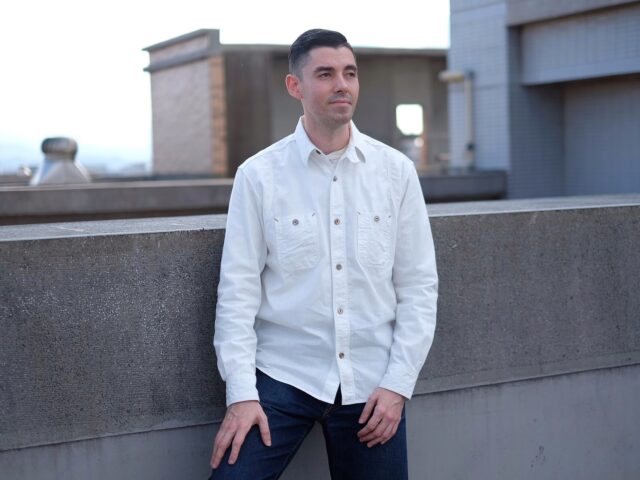
John Tesoriero
John Tesoriero from @papa_nui_cap_co Instagram

You mentioned in our first interview that you have periods of binge designing and that you had 19 sampled caps ready to go. How many of those made it to market? How do periods of creativity like that, where many caps don’t see the light of day, shape future collections?

Binge designing a stream of products is something I still do. I find when I’m on a roll I need to keep going until I’ve exhausted a line of thought. It’s almost like a creative fever – once it starts, I have to see it through to completion or I lose momentum entirely.

Dealing with factories in Japan means that I have to slot into their production windows, and many of those can be unrealistic if I was working from scratch. The Japanese factories work with incredible precision, but they also work to very strict schedules. Having a backlog of samples made means that when I get the go code I can choose which of these products best suit the direction I’m heading in and I can make an instant decision. It’s like having a creative arsenal ready to deploy.

The biggest issue then becomes trying to coordinate all of my retail numbers so I can place quantities. Often this is very tight – 7-10 days – and I find that I’m constantly having to push people for commitment in order to get the products placed in time. It’s not ideal but it’s what I have to work with. The fashion calendar waits for no one, especially when you’re working across multiple time zones.

The second part of the question is that most of what I do will eventually see the light of day. If it doesn’t, it’s usually because the fabric didn’t work well in that style or the factory failed to nail the fit correctly and I give up in frustration after a couple of samples. But even those failures aren’t wasted. Usually however, even these provide a spark or a jumping off point to another idea that sometimes can only be gleaned from a mistake or something you’re not happy with. I can build on that and eventually arrive at a better place. Some of my best caps have come from fixing what went wrong with earlier attempts.

In terms of shaping future directions, my wife is awesome at seeing the trees from the forest and often tells me I don’t need to reinvent the wheel every season. She keeps me grounded when I get too caught up in constantly creating something completely new. I’ve taken this on board and going forward this year there’s a greater focus on Papa’s icon classics – a re-release of the styles that customers are always clamouring for. The aim is to have these pieces constantly in stock. It’ll be products like my A-3 1st edition, the Tail End Charlie and the Hell Cat.

Papa Nui A-3 Cap
The Papa Nui A-3 Cap from @papa_nui_cap_co Instagram

What’s happened in the past 12 months or so is that the brand has attracted so many new customers who are now perusing older posts on my Instagram account and that’s created a demand for styles that they’ve missed out on. Plus there’s my older customer base with caps that are 4 and 5 years old that they are wanting to replace. So this will be a resource where you can pick up the very best of what I do on a more regular basis. Yes, all of this feeds into the shaping of my future collections – classics mixed with a seasonal offering. It’s about finding that balance between innovation and giving people what they know they love.

Let’s talk about failure! What’s your relationship with failure in design? Have there been any Papa Nui caps or other products that didn’t work out as expected? How did this impact your process?

Failure? Yes absolutely. I’m well acquainted with that concept, but hell, I’ve got broad shoulders. How else do you think I’ve survived over 40 years in this industry?

I know the feeling when things don’t go right – when you’re lumbered with a shit company or when your boss is a fuckwit, when you don’t have a voice or people dismiss your ideas, or a place is so toxic that every day your heart sinks. I know all these things and have been marched out a few doors in my time. But fuck that, it’s all part of it. It helps shape who you become, makes you stronger and more focused on breaking away and doing your own thing so you’re not compromising your vision for another person’s monied up ego.

Sometimes people just aren’t going to get what you’re about, and that’s natural. I cannot expect that everyone shares my aesthetic or has the same points of reference as I do. It can’t make sense to everyone because people are constantly at different stages of their own sartorial exploration. I can’t expect them to understand that I’ve absorbed just about every great reference point gleaned from National Geographic magazine from 1940-1960 or appreciate my wading through decades of magazines or shopping vintage stores across the globe since I was 20 years old.

There’s always going to be a divide somewhere, so it’s important then to try and take these people on a ride with you – with the product, with the backstories – to frame it in a way that can be readily absorbed. You have to meet people where they are and bring them along on the journey.

There’s also another side to it. From a production point of view, an idea can be strangled by the constraints that larger factories place on you. Sometimes things are so rigid there’s no flexibility or no willingness to work with you. If it feels too much of a hassle they don’t want to know, so at times a great idea can go to the factory floor to die and there’s not much you can do about it. That’s the harsh reality of manufacturing – not every brilliant concept survives the production process.

The other thing I’ve noticed is that people are more conventional than you think and find comfort in something as familiar as a baseball cap. Essentially they just want a generic baseball cap with a logo that’s cooler than the next guy. When you start challenging the conventional shapes you begin to talk to a more confident and knowledgeable customer, and if you’re not that person then sometimes the best stuff is wasted, which is a shame.

Is that a failure though? No, I don’t think so – we just imagine things differently. For me it’s important to reference a time in menswear when every activity had a cap or hat that was specific, and so the landscape of men’s fashion was richer for that. This unfortunately was usurped by the unexceptional baseball cap with an embroidered logo made in China which now encompasses everything, and so much is lost including men’s confidence in wearing alternate headwear. That’s what I’m trying to fight against – that homogenisation of style.

Following on from that, is there a single cap you’ve produced that stands out as not getting the reaction you thought it would? For me, one of my all time favourite models is the Waikikian and it was by far the most slept on cap we’ve had through the door

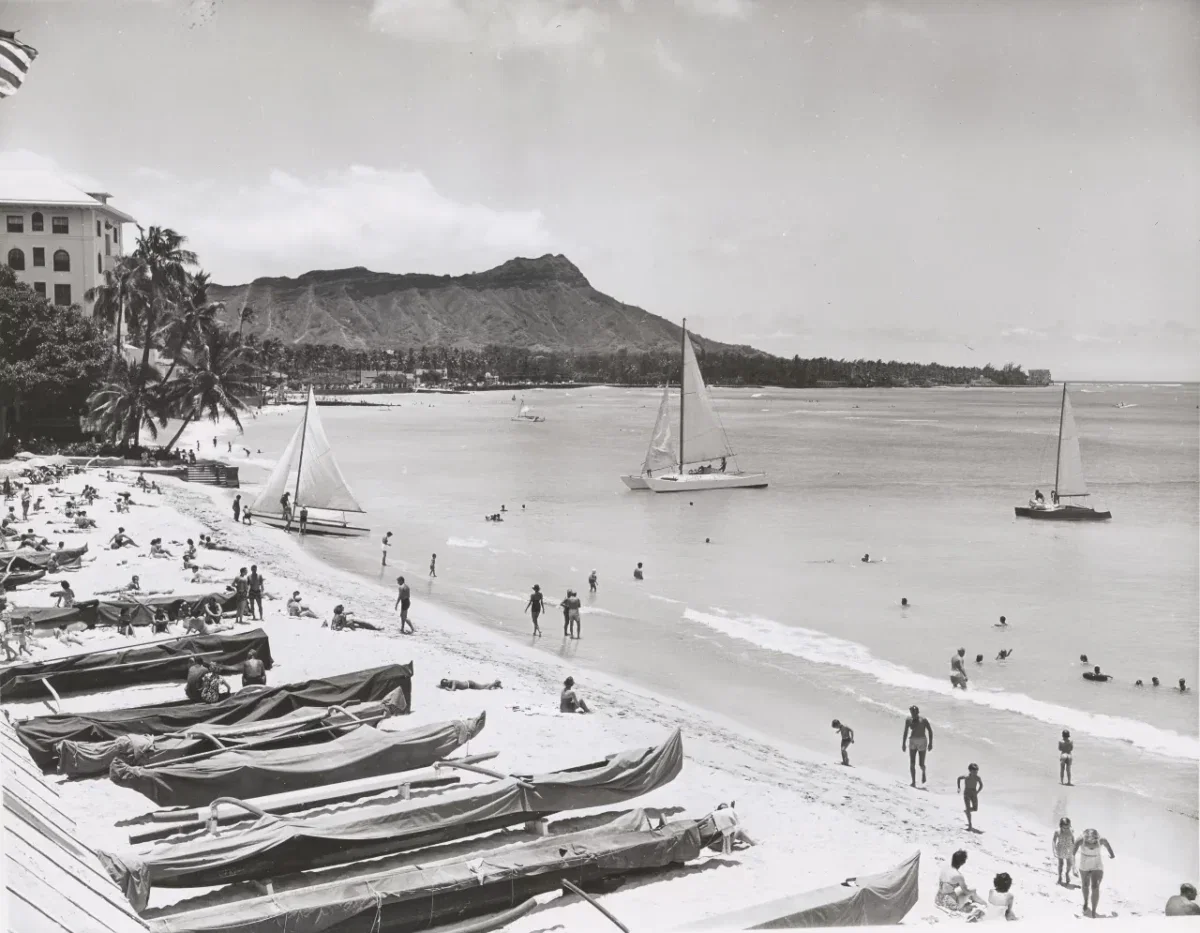
The Waikiki – you loved that one aye! That was a really lovely cap and the fabric was a standout. I just had images of Beach Boys sitting around in front of the Moana hotel wearing that one. Sometimes things are just a slow burner and I can’t always expect others to see the romance quite the same way as I do. What feels obvious and evocative to me might take time for others to appreciate.

Waikiki Beach, 1940s

As for a style that didn’t fire, that would be the Pilar. So much went into this cap. I can’t even begin to talk about the struggle to get it made. The spec sheet literally did two laps of the globe before I could convince a Japanese factory to touch it, and only then if I provided the main component which was the ‘patent leather’ visor. It was a manufacturing nightmare, but I was determined to get it right.

Papa Nui Pilar Hat
The Papa Nui Pilar Cap from @papa_nui_cap_co Instagram

That cap was an absolute cracker but it was also very bold, and so you had to really understand what you were getting. I’ve seen the Ernest Hemingway name associated with so much commerciality – everything from pyjamas to sunglasses and obviously to caps – and not one manufacturer had actually thought of the product they were designing as anything other than a namesake to make money off. They were just slapping his name on generic products without any real thought or authenticity.

I set out then to make as close as a replica of the real Hemingway fishing cap that I could, something that wasn’t hoodwinked by fancy copywriting. The Pilar was the goods – original visor, original crown shape, and the internal tag I used had the original typeface that was painted on the rear of the Hemingway boat in the 1930s. Every detail was researched and authentic.

My only divergence was to add my military aesthetic, which was easily done as Hemingway had loaded his real boat full of grenades, bazookas and Tommy guns as well as a bunch of sonar gear and then in 1943 patrolled the Straits of Florida and Cuba hunting German U-boats. The whole concept made total sense and was an awesome homage product. It wasn’t just about the literary connection – there was real military history there too.

Papa Nui Pilar Hat
Brian Robinson wearing the Pilar from @cwoodcockandco Instagram

My friend in the USA, Brian of C. Woodcock & Co, took this cap on board with his vintage outdoorsman brand and sold a truckload, but for me it took a while to clear inventory. Sometimes the right product finds the wrong audience, or vice versa. Having said that, anyone that bought one is very happy with their purchase. It’s one of those pieces that people who ‘get it’ absolutely love.

The Pilar cap story is a great one. What drove you to go to such lengths for historical accuracy on that particular piece, and how do you decide which projects are worth that kind of investment versus knowing when to cut your losses?

I love Hemingway, probably one of my favourite writers, and his style is a ‘thing’. His way of dressing is unpretentious and rugged yet incredibly personal and he has certain signature items. His caps were obviously one of those.

Ernest Hemingway on the Pilar
Hemingway on the Pilar

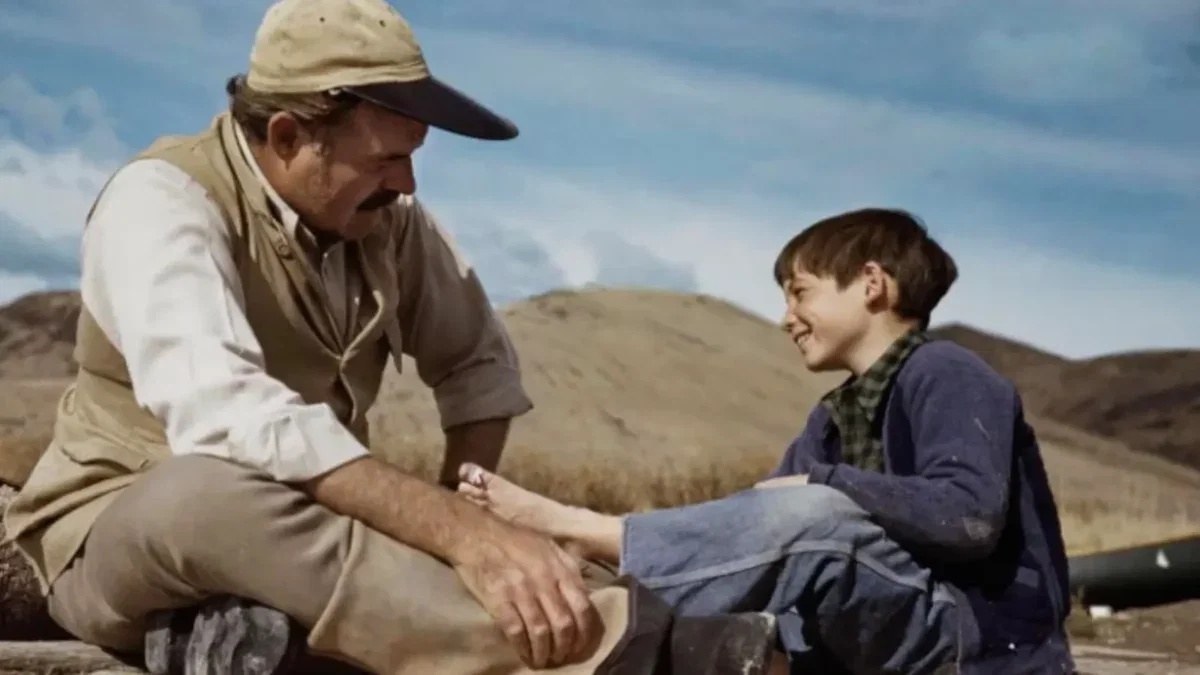
The long bill fishing caps were something that he wore extensively throughout the 1930’s and all research points to these most likely coming from the original Abercrombie and Fitch outfitters on Madison Ave NYC. Anything that was on the market that vaguely resembled these caps were always sold as The Hemingway Cap. Truth is most of those connections were malarky and hogwash. You see the advertised product, you look at the associated Hemingway photo, and the two things don’t even match other than the basic shape. So I wanted to have his cap made as best as I knew how.

Ernest Hemingway and his fishing cap
Hemingway in his fishing cap with son Greg

Whilst my fabrication is different, the visor and crown details are totally on point. It’s such an obviously thing you’d think, but people very rarely go to the effort of doing something right. Why? I can’t really say, perhaps they don’t think those details matter to the bigger picture of selling stuff, but to me it’s all about those things.

There are products that you do that are not about making money. Maybe this is why I trade differently in the market place. To me it’s about seeing an idea realised. Somethings are so cool yet so left of field that you just have to make it happen. If the right people understand then your goal is complete. If it takes your average customer awhile to understand or never, then so be it.

Some things are not for everybody and I’m very comfortable with that. 

You mentioned in 2019 that timing is everything and missing it lessens impact considerably. What’s an example of when you got the timing perfectly right, and when you missed it?

Those early days of the brand I had secured Frog Skin camo as a core element of what I did. It formed up the original concepts of the brand. In fact I can still recall a moment I was sitting on the beach close to 15 or so years back and wondered if I could get Frog Skin camo away from the re-enactors market and into products for the street. It was one of those lightbulb moments where you see a clear path forward.

The timing was perfect and because of my extensive use of this camo pattern it’s hard to see it now and not think of Papa Nui. It’s popular in the market and lots of brands are utilising it now, but I believe it’s synonymous with the Papa Nui products – the Beach Battalion Hat and the Corsairs Cap. We really established that connection between Frog Skin and modern streetwear.

Missing the boat? I think that would be short shorts – 1940s lengths like UDT shorts. My favourite personal pair were my Dad’s that he bought about 1949 and were essentially a 40s swim trunk with the netting inside. They had this perfect vintage proportion that you just don’t see anymore.

Vintage UDT shorts
Vintage UDT shorts, showing their short length compared to today’s shorts

I reworked these into olive drab herringbone twill and then went to my retailers with the idea. Unfortunately I couldn’t really get any buy-in that would help me to meet the factory minimums. They all said they’re too short, so the idea was shelved. It was frustrating because I could see the potential, but sometimes you need others to share your vision to make it commercially viable.

Then I felt I had missed the boat when all around me everyone was beaching it in UDT trunks. It was one of those moments where you kick yourself – I should’ve just risked it and ordered the stock for myself. Sometimes you have to trust your instincts even when others don’t get it.

Moving forward to this summer season, I added an inch or so to the style and made some small changes to the same basic style and I sold through everything I had in about 12 days. Sometimes you just have to back your own play. The market was ready for them, I just needed to find the right moment and make some minor adjustments to get people comfortable with the length.

How do you balance historical accuracy with creative interpretation? Where do you draw the line between respecting original purpose and making something relevant for today’s wearer? What compromises do you refuse to make?

I could not look at something and think how can I make it better. Take the A-3 Mechanics Cap that I made for instance. During World War II they issued millions of these caps and they were made accordingly – cheap and fast. They’re great caps of course, but when I made mine I just beefed the whole construction up so that now it’s a beast built for punishment. It’s about taking something that was functional but disposable and making it heirloom quality.

I’ve stayed true to the styling and the accuracy of the original patterns but I’ve interpreted it into something completely different. Something that’s not a throwaway, but a cap that’ll go the distance with the finest manufacturer I could find. I never started out to be a reproduction brand either. I’ve always stated that. My angle was to enhance the originals, to stay true but build better. My whole schtick is based on this premise.

The A-3 Cap
The iconic A-3 cap

It gives me space and creative license to then develop ideas that have integrity and authenticity but also a solid place in the now. You’re not just recreating history, you’re improving on it while respecting what made it great in the first place.

Ethical production is the one challenge that you can’t compromise on. I know John Lofgren is a stickler for this but I am also solidly on board, as is Bryan from The Rite Stuff who also makes under John’s umbrella. It makes a huge difference not only from a conscience point of view but also from the product quality side of things – our collective product across the three brands is superior for it. When people are treated well and paid fairly, it shows in the work.

If I choose to produce outside of Japan, I try to make sure I’m dealing with an individual maker and not a factory. At least that way I know that what I pay goes directly to the individual’s welfare and not to a faceless factory of minions. I’ve developed very real relationships over the years this way with makers in Australia, in Thailand and in Vietnam.

I’ve always said this – that soul comes from a maker and not a location. One country or another doesn’t have a monopoly on this essence. It’s about finding people who care about their craft, regardless of where they happen to be working.

You mentioned absorbing references from National Geographic magazines and spending decades shopping vintage stores globally since you were 20. How are these decades-worth of references stored. Do you have a way of cataloging things of is it all in your head?

I’ve got pretty good recall! I used to use paste up books throughout the late 80’s and early 90’s, mostly because I was working in the industry and all offices would have a colour copier which meant I could scan images and paste in a visual album  for future reference. Now everything just floats in my head and when an idea is materialising I can go back and cross-reference the original source.

National Geographic’s are classic because in there lies an era by era reference of everyday clothing styles and how they were worn, as well as other awesome stuff, especially the issues from the Second World War years. I used to also buy all the Schiffer collectors books, but stopped many years ago and sold them off. I don’t have the space to store that amount of reference and plus I’ve been reading those books for over 40 years so have absorbed it all into my head. Having that wealth of knowledge is what sends me up the path on some of my lesser known product themes.

Outdoors style from early mid century comes to mind. I’ve always loved that stuff. There was a time when everyone else was buying Gabardine and I was filling my suitcase with 40’s plaid shirts, fly fishing vests and canvas hunting coats.

Looking at a Papa Nui cap from 2019 and one from today, what are the biggest differences you see? What has stayed consistent?

The biggest difference is in the product quality, much of which remains unseen however. This is the result of focusing on a thousand nuances that only make sense when you put the cap in your hand and feel the heft. Only then do you realise There’s No Cap Tougher.

Can you give  some specific examples of these hidden improvements? What are a few of those minute details that you obsess over that customers might not immediately notice, but that justify the premium over a standard cap?

Sometimes this is just a pattern thing. It’s something I used to agonise over when working with Troy O’Shea, the minutia of adding a half centimetre to a seam etc. It something that drives my Japanese counterparts insane, because I’ll be pulling up the pattern and asking questions like why does the crown pinch etc, for me the visual of how it sits is all important, so those things are difficult to explain.

Then there’s the construction details that really are unique to Papa Nui, most of which are hidden. Take one of my hats and look inside the sweat band, everything is taped and finished and tidy. Most just hide all the raw cut seams underneath and never think of that as a detail feature.

Secondly my Army Duck visor linings are far superior by a country mile. They are flexible and natural and can be shaped and set in a style. These work the best with a fully stitched visor like my Hell Cat cap or my A-3, however it can’t be used in cap visors that have no structure, so if its just an edge stitch around the visor then it has to be a firm plastic material with the fabric stretched over it. This also means you get bubbling from the unsecured fabric  because there’s no stitching, but this is how caps have been made for 100 years so it’s not really a big deal.

We spoke about your father, who sadly passed a couple of years back, in our last interview and it’s clear from that conversation plus a lot of the stories your shared on Instagram how much of an influence he was on both you and Papa Nui. What did he make of Papa Nui and the idea of utility clothing being repurposed for the modern market?

My Dad – wow, what a beautiful human being. My father was a renaissance man who embarked on a life of self-improvement and he nurtured those attributes wherever he could, at home or in the community. He was always learning, always growing, always trying to better himself and inspire others to do the same.

Even his wartime experiences had a positive spin. My brothers and I all heard his horror stories. The one where Dad was in a truck moving up to the lines and from his seat in the rear he could see the tyres spinning in the mud and throwing up enemy body parts that had been swallowed up from an earlier battle. We knew all of that, but that’s not what he chose to focus on. He could have been bitter or traumatised, but instead he found the light in it all.

For Dad, it was all about his mates and the larrikin behaviour and all those wonderful Australianisms that belong to another generation. The camaraderie, the humour in the face of adversity, the bonds that were forged under impossible circumstances. Dad never missed an Anzac Day. He marched until he could no longer cover the distance around the city circuit. He was still telling stories sitting in his bed at the hospital, endearing himself with the nurses. Right until the end, he was sharing those stories and making connections with people.

Dad loved the Papa Nui idea. I think he felt flattered that I could build this whole thing based around his adventures, albeit loosely. He did provide the impetus at that moment when I was trying to figure out my direction and the only consistent thing I could think of was his war stories and how that had been the major influence in anything I did. It gave me that anchor point, that authentic foundation to build from.

From there it found its own legs and the brand developed accordingly, but I think he loved the creative process involved as he was an artist himself, so he had an appreciation of these things and I totally get that. I see it now with my own children who are both creatives – God forbid! – but I just love watching how things develop. That creative gene just keeps getting passed down, and there’s something beautiful about seeing your influence continue through the generations.

You’ve worked with John Lofgren since the start of the Papa Nui brand. How has this relationship developed over time and how has the way you work together changed since you first started?

John remains true to our initial handshake which is amazing in its own right. He began by overseeing my production in Japan, which was an important part of distinguishing my product from others on the market.

John Tesoriero and John Lofgren
John Tesoriero and John Lofgren from @papa_nui_cap_co Instagram

From there John‘s worked with myself and Bryan from The Rite Stuff, to create an umbrella idea where we work under his manufacturing capacity but become a triptych of makers who support the common good. Have you seen John’s boots lately? They’re insane and the product of mindset that I completely get. I also now get to work with Bryan on product ideas that have mutual benefits to our respective markets and best of all we did our first pop-up last April in Sendai at John’s store, Speedway. It was an awesome weekend and I loved the opportunity to meet my Japanese customers. Based on the success of this we have decided to secure a space in Ebisu for October to run a Tokyo pop-up. Hopefully this brings Papa to a greater audience and they’ll be lots of exclusive products for the event. 

You’ve widened the net with collaborations too, with East Asia Supply Co, Surfasam, The Rite Stuff amongst others in the last couple of years. How do you decide to collaborate and what does the process look like?

Collaborating also opens up other opportunities for me. It gives me space to explore product categories and ideas that perhaps aren’t my major focus but that I have an intense passion for. It also allows me to produce in small quantities as many of the factories in Japan will not budge on minimums. You’re stuck with their production rules unless you can find another way around them.

It’s okay when you’re collaborating with CC Filson or Alpha like I did in 2024 as their numbers are solid, but the smaller collabs are more fun. There’s less pressure and more creative freedom when you’re not dealing with massive order quantities.

East Asia Supply Company is a good one as it’s a Hong Kong-based independent, specialising in Vietnam era products, so I get to work within smaller parameters which means exploring ideas without a huge investment. Plus it also means you get mid-season drops to keep the product offering interesting. It keeps things fresh and gives customers something to look forward to throughout the year.

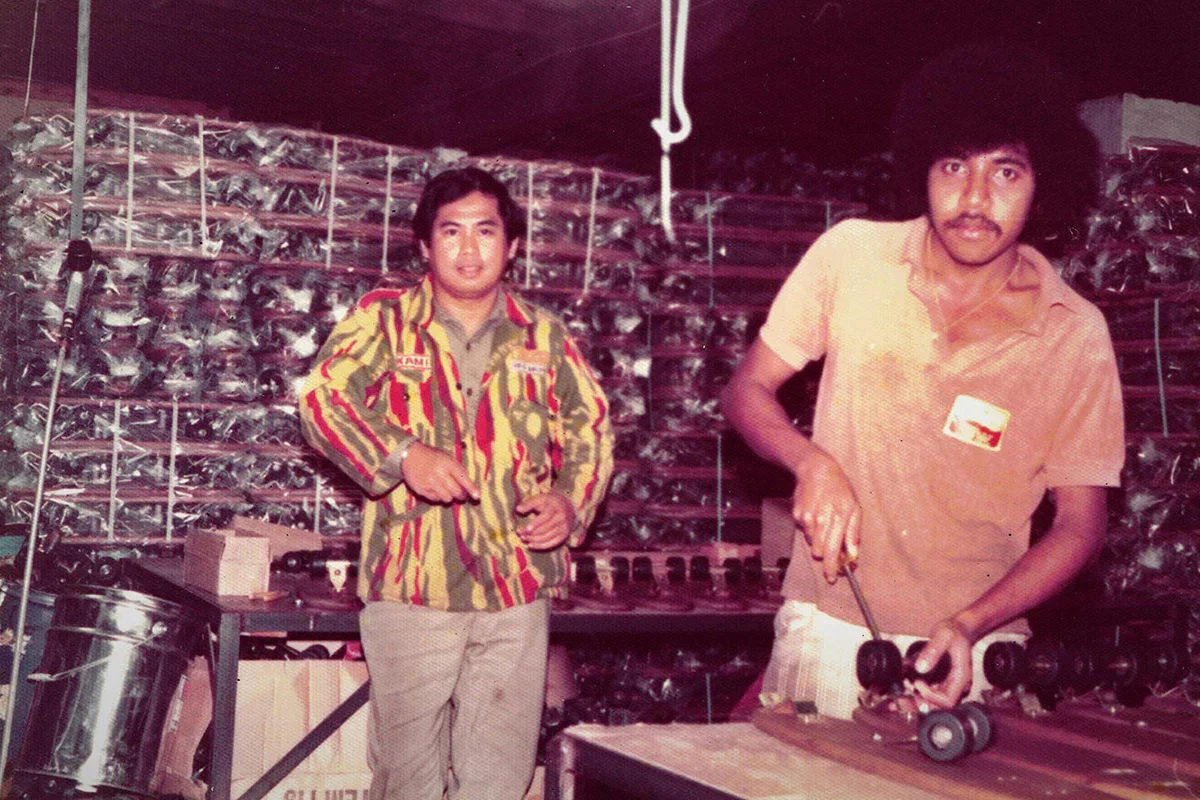
Nick at Surfa Sam was a blast though! The brand was the original skateboard company from Sydney Australia in 1963. Every kid in my neighbourhood skinned his knees or broke an arm on these boards. Nick bought the brand and reinvented it as a collectors’ homage to the era and then brought me on board because of my pioneering history in Australian skateboarding. It was like coming full circle – going back to my roots but with all the experience and perspective I’ve gained since then.

Surfa Sam workshop
The Surfa Sam factory

It was fantastic to create my limited edition board which again had my Papa makeover and to work on the mini documentary I did with him and his camera crew. Those kinds of projects remind you why you got into creative work in the first place – it’s pure passion and storytelling.

The Rite Stuff was an easy one, as it’s the meeting of two specialists. We decide the theme and then both work our magic. The upcoming collab in October sees the two brands focusing on early nautical denims set against the backdrop of the Moku craze in 1930s Honolulu. When you’re working with people who understand your aesthetic, everything just flows naturally.

Bryan Shettig with John Lofgren
Bryan Shettig from The Rite Stuff with John Lofgren from @the_rite_stuff Instagram

I guess the process is nothing more than it needs to be to feel right. I’ve been approached by quite a few companies and one of the drawbacks is they don’t get that I’m completely doing this on my own from the most creative level to the most manual level. They expect me to operate like some big corporate machine when I’m literally a one-man show.

One company sent me enough import paperwork to take me a week at the computer. It was nuts – thinking of plastic bags with consumer information printed on it, country of origin tags, wash information etc, etc. The list was endless. I just put the product in the mail bag and send it out. Who the hell wants to work like that? Not to mention it attracts too much attention at customs at the other end and customers get stung by unreasonable tariffs. Flying under the radar is always a better way of doing things.

There’s still some great stuff ahead this year with new collabs with Tony Sylvester. CC Beniot and I have some super cool shit in the pipeline, and hopefully also the promise of the best board shorts ever with my favourite manufacturer if they’ll just commit to getting the ball rolling! Sometimes the hardest part is just getting people to make decisions and move forward.

What is your criteria for saying yes to a collaboration?

I have to like what someone else is doing? Yes? Often though, it comes down to they have an area of speciality which isn’t really my forte but I am interested in. I’m up to my eyeballs thinking about caps, I also happened to have great ideas about jackets shirts and trousers, because often you think of an idea as a total concept or look.

Having the resources to do it all becomes impossible and so its far more economical to team up with those other guys who do do that stuff and go hey heres something I think benefits both our positions. This is what’s happening at present with Bryan at Rite Stuff. His trousers and shirts patterns are pretty spot on so we can then just mix the tasted levels around to create newness. Plus it also opens up his customers to my brands and vice versa.

How do you maintain Papa Nui’s identity when working within someone else’s brand constraints, and what’s the most challenging collaboration you’ve navigated so far?

The Papa has a very distinct thing going on. My main angle was product that was climatised. I live in the antipodes for fuck sake, I can’t be parading around dressed like I’m at the Governors Garden picnic in New York City. I want people to understand that it’s 85 degrees and the humidity is 90% so what the hell are you wearing?

Focusing on that alone provides a huge point of difference and so if you’re dealing with me on a creative level then you need to be on a similar wave length. I don’t really think I’d be collaborating with anybody if we couldn’t find some common ground.

Usually though I’ll find a great WWII pretext to engage in with them. C.C Filson was a classic example. All I needed to do was tell the story of the Alaska Scouts stationed in the Aleutian’s and sabotaging Japanese occupational facilities to get that one over the line. With those awesome back stories most product makes sense. Having said that dealing with such a large corporation when you’re an independent can be challenging.

Patches have become a big part of the Papa Nui offering. How did this idea come to fruition? The authentic feel to the patches is levels above any others I’ve seen – even the smell of the first batch sticks in my mind – how did you capture this?

Everybody loves the patches. What makes all patches awesome it’s the hand feel that only comes when you eliminate technology.

Papa Nui patches
Papa Nui patches

New isn’t always better. We all know that right? That’s why the best denim comes from shuttle looms and not air jet machines. Same with patches. If you want something that feels right. You have to go to the source. This is what I did to get the authentic Vietnam War your Patches.

I just went and found a Mom and Pop set up in Ho Chi Minh City that still uses hand machinery techniques. It’s simple really, they do an awesome job and what I pay them would go a long way to supporting that family, which is an absolute bonus. 

The main attribute of the Papa Nui brand is you. Do you think it’s possible to maintain the quality, authenticity and personality of a product whilst expanding into a bigger operation and doing significantly bigger numbers?

Yes it’s entirely possible so long as there is integrity in the products I make – there’s nothing that should get lost in the translation. It’s definitely set up so that it can be scaled. It’s grown out to the stage where it’s feasible to make most of what I want even if there is retailer pushback on some ideas. I still have the volume of customers to make things happen on my own and sell through. That independence is crucial – it means I’m not entirely dependent on others believing in every idea.

The biggest drawback is getting new retailers. That’s a tough gig and many of them only want to buy into the big Japanese brands, which is fine – however those brands aren’t particularly affordable either and when every store has the same stock then what’s the point? There’s no differentiation, no unique selling proposition. It becomes a race to the bottom on price rather than offering something special.

I’d love to have a larger presence in Europe and I definitely love to break into Japan, but time will tell. Those markets are notoriously difficult to crack, especially as an outsider, but they represent huge opportunities if you can make the right connections.

John Tesoriero
John Tesoriero from @papa_nui_cap_co Instagram

In this end of the market everyone has to do their bit and support each other – my best retailers know this and do a great job of promoting the brand. It’s not just about placing orders; it’s about telling the story, educating customers, and really championing what makes Papa Nui different.

My next step is to free myself entirely from the day job I do and focus completely on Papa Nui and get it to the stage where it can pay me a salary and my household bills. I’ve a little ways to go yet but it’s not far off and I move closer every day. It’s that classic entrepreneurial dream – being able to make a living doing what you’re passionate about.

I marvel always that I started this whole thing from a shop bonus of only $345. Sometimes the most humble beginnings lead to the most meaningful journeys.

The inspiration part? I’m not worried about that. I’ve an entire lifetime of absorbing influences, so I don’t think I’m about to run out of ideas too soon. The Papa has the potential to go off in so many directions and still remain true to its brand soul – military and utility are after all so timeless and then they cross over into outdoors which is a whole another timeless resource. Yeah, I can’t see that Papa will be going away any time soon. The well of inspiration runs deep when you’ve been collecting references for decades.

Papa Nui Cap Co at Those That Know

Some highlights from our Papa Nui collection. Head to our Papa Nui page to see our entire current stock.

Want more interviews?

Our journal contains more interviews with the people behind our brands. Follow the links below for interviews with: