
Woven in Kurashiki: The Story of Takeyari Canvas
Pick up a piece of canvas clothing from Seuvas and the first thing you notice is its substance....
No products currently in your bag

Every heritage garment tells a story that runs deeper than stitches and seams. In the case of Alberton, the journey is unusual: a 19th-century cotton duck mill village in Maryland, United States, whose name has been revived as Alberton Japan by a company committed to military-grade fabrics and historic accuracy. What began as a mill town in the 1830s is now a fabric brand supplying the most discerning makers of workwear, bags, and outerwear worldwide.
We carry a full collection of Alberton Japan’s own product, plus their collaborations with our other brands Gypsy & Sons and Fits Like a Hug. We’ve got everything needed for a solid heritage outdoor setup, from jackets and vests to backpacks and blankets. Outside of Japan, you’ll only find it at Those That Know.
Interested in the story behind the brand and why it was revived? Read on.

The story begins in Elysville, a mill village established along the Patapsco River in Maryland in the 1830s. Here, a cotton factory produced heavy woven cloth known as cotton duck, the strong, plain-weave fabric used for sails, tents, and military equipment. By the 1850s, the village was renamed Alberton, after James S. Gary, a prominent Maryland industrialist and later Postmaster General of the United States. The Gary family ran the Alberton Manufacturing Company, producing cotton duck that found ready markets in government contracts.
The business was eventually sold to C.R. Daniels Company, which continued production until floods devastated the valley. The village itself was renamed Daniels in 1940, and after Hurricane Agnes in 1972 the remaining mill operations ceased. What was once Alberton faded from American industrial maps, remembered mainly in Maryland’s local history and the occasional archive photograph of the mill buildings on the Patapsco.
The name “duck” derives from the Dutch doek, meaning cloth. In American textiles, cotton duck refers to a plain-weave canvas made with double warp yarns and a tighter construction than ordinary canvas. The result is a fabric that is smoother on one face, highly tear-resistant, and less prone to fraying.

Two systems developed: numbered duck, where lower numbers indicate heavier weights (No. 1 being around 18oz, No. 12 around 9oz), and Army Duck, a special specification introduced for military use. Army Duck fabrics were woven with plied yarns in both warp and weft, producing even greater strength and resistance.
By the mid-20th century, cotton duck production was governed by federal specifications, notably CCC-C-419, which defined numbered ducks (Type I) and Army Ducks (Type III). These standards ensured uniformity for military procurement, with precise definitions for yarn plies, thread counts, and weights. Later, performance requirements extended into flame resistance for tents, giving rise to standards such as CPAI-84.

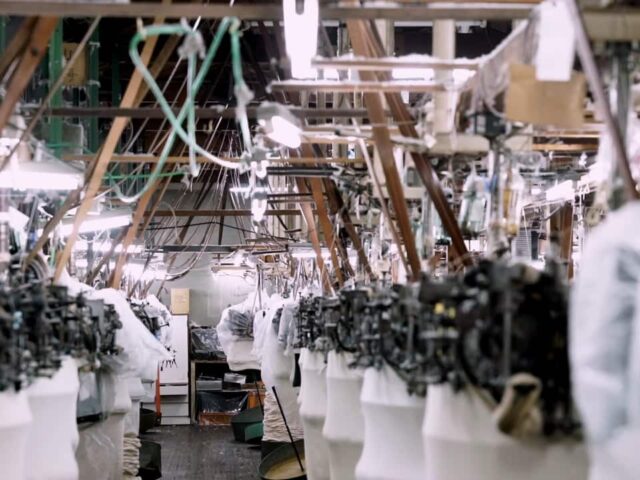
In 2016, a group of Japanese textile specialists launched ALBERTON®, determined to reproduce historic duck cloth with complete fidelity. Their research drew on surviving fabric samples and technical documents. They restarted shuttle looms more than 100 years old in the Chita production area of Aichi Prefecture, a region known for its expertise in weaving heavy cottons.
In 2020, after four years of work, the company received approval from the United States to carry forward the Alberton name, linking their revival directly to the original American mill.

Available in weights from 10oz to 21oz, Alberton’s Army Duck follows the U.S. military model. Tight plied-yarn weaving creates exceptional tear strength. Some versions are finished with paraffin wax for water resistance, while others are left untreated for natural ageing.
A modern evolution that incorporates modacrylic fibres (Kanecaron® and Protex®) in the weft, giving flame-retardant performance while retaining cotton’s natural handle. Drawing on coatings developed for the Japan Self-Defence Forces, GUNMAKU fabrics repel water, block wind, and still pass CPAI-84 flame tests (10).

This unique fabric pairs a cotton warp with a jute weft, creating a twill that is strong yet lighter than all-cotton equivalents. After weaving, it undergoes dyeing and a bio-processing wash to soften handfeel, making it suitable for outerwear and trousers.
Alberton also weaves numbered ducks, from No. 1 (around 18oz) to No. 12 (9oz), maintaining continuity with the federal system. This gives makers a choice of historic weights and allows them to select fabric precisely for purpose.
Stepping beyond wovens, Alberton produces a pile knit fabric using the sliver-knitting method. Here, Protex® modacrylic is combined with other fibres to yield a pile with excellent warmth, softness, and inherent flame resistance, a modern interpretation of military pile linings.
Heritage fans know that the character of a fabric lies as much in its finishing as in its weave. Alberton uses two techniques of note:

Cotton duck is treated with paraffin wax, producing a water-repellent surface that develops creases, scuffs, and patina with wear. Waxed canvas needs occasional re-proofing, but rewards the wearer with distinctive ageing (13)(14).
By applying cellulase enzymes, surface fibres are gently broken down, giving the fabric a smoother hand and reduced pilling. This makes heavy twills and ducks more wearable from day one, while still retaining long-term strength.
Together, these treatments balance authenticity with comfort, fabrics that feel vintage but wear easily in modern life.
For shuttle-loom devotees, Alberton’s selvedge fabrics carry special significance. Many Army Duck bolts feature blue lines at the selvedge, historically woven as “guide marks” to help sewing operators align cuts. While invisible in a finished product, these stripes are a visible sign that the fabric has been woven in the traditional manner. For today’s heritage enthusiasts, they serve as proof of authenticity.

Originally, cotton duck was the stuff of tents, tarpaulins, and military packs. Today, Alberton Japan’s fabrics find their way into backpacks, tote bags, aprons, and jackets. A roll-top rucksack in 18oz Army Duck offers the same rain-shedding reliability once demanded by the U.S. Army, while ageing into a bag that looks better each year. Collaborations with Japanese brands showcase the adaptability of these fabrics, from functional outdoor gear to fashion-forward heritage pieces.
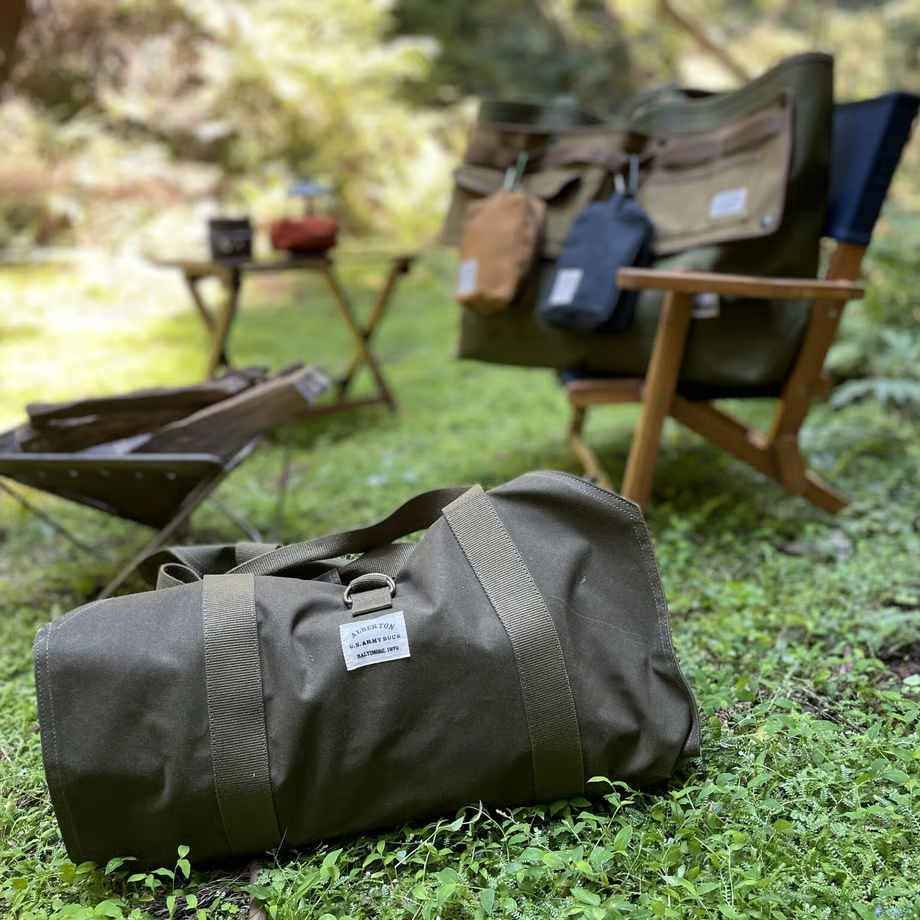
For those considering an Alberton piece, here are some guidelines:
The reward is a garment or accessory that ages with you, acquiring patina, creases, and a story to match its history.

From the riverbanks of Maryland to the looms of Aichi, Alberton embodies the persistence of functional fabric. The American mill may be gone, but its name lives on in Japan, carried by a company committed to specifications, authenticity, and enduring quality. For heritage enthusiasts, Alberton offers more than cloth: it offers continuity with a material culture that valued utility, strength, and honest wear. Whether in a roll-top backpack or a work jacket, today’s Alberton products carry the same ethos that once clothed soldiers, sailors, and workers — proof that some fabrics never go out of style.
Alberton is available outside of Japan only at Those That Know. Head to our Alberton section to shop the latest arrivals.

Pick up a piece of canvas clothing from Seuvas and the first thing you notice is its substance....

Fred Harvey-era jewellery refers to a distinctive style of Southwestern Native American adornment that emerged in the early...
Ventile is a fabric with deep roots in British textile history, originally designed to protect World War II...
In the next in our series of in-depth articles relating our products and brands, we’re going to get...
With the arrival of the new Heracles chambray shirt from The Rite Stuff, we thought it was a...
Loopwheel t-shirts are the absolute best quality t-shirts available. As we’ve added The Rite Stuff to our list...
Stay in the know
Sign up for occasional updates from Those That Know.
You are now signed up to receive updates from Those That Know.