
Papa Nui on Growth, Creative Evolution and Staying Authentic
Papa Nui began with $345 from a shop bonus. More than a decade later, after over 100 cap...
No products currently in your bag

The first time Eric Maggiori understood what clothes could do, he was in Tokyo. It was 2004 and, until then, clothes had barely registered with him. He collected Dragon Ball Z cards, Panini albums, figurines and rocks; he played football. Then his brother took him into WEGO and handed him an old pair of Levi’s, a Made in USA T-shirt and a small corduroy jacket.
“Instantly, I felt cool,” he remembers. “It was the first time I looked at myself in the mirror and thought, ‘Oh… okay. So this is what clothes can do.’”
That moment eventually led Maggiori to vintage workwear, journalism and the creation of AVANT, the independent publication he founded in 2018. Those That Know has carried AVANT from the beginning, and its development has run almost in parallel with our own. Over the years, we have seen how much thought, research and care goes into every edition. The result is not simply another magazine, but a considered printed object built around garments, archives and the cultures that surround them.
The latest issue, Eric Maggiori’s Collection, Volume 2, follows a first volume published in 2021. Limited to 1,000 copies, that edition has long since sold out and become highly sought after by collectors.
Back in Paris after that formative trip to Tokyo, Maggiori and his best friend, Vincent, began visiting every thrift shop they could find. They searched Guerrisol and Frip’Star for old football shirts, American rock T-shirts from the 1970s and ’80s, and vintage skate shoes. There was no grand collecting philosophy yet. The appeal was immediate and personal: clothes offered a way to look different and step outside what everyone else was doing.

A 2011 visit to Los Angeles changed the direction of that interest. Discovering workwear there was, in his words, the point at which he “really crossed over”. By then, another part of his life had already begun to provide the skills he would later bring to AVANT.
Maggiori has worked as a journalist since he was 18. He began at the French rock title Rockmag before studying journalism, then joined the football magazine So Foot around 2010 and became its editor-in-chief in 2014. The publication taught him to look beyond the apparent subject and find the human stories around it.
“We talk about football without really talking about football,” he says, “focusing instead on the human side of things, on the small, often overlooked stories. And that’s something I’ve always loved.”
As he travelled more widely in the United States and became immersed in workwear, he found the same kind of overlooked stories everywhere: vintage dealers with extraordinary anecdotes, collectors who had spent years travelling the world, and the pioneers behind the clothes themselves. He began writing these stories down simply so that he would not forget them. Before long, he had accumulated enough material for a book.
Finding a French publisher with the right sensitivity for the subject would have been difficult in 2018, so Maggiori decided to do it himself. Working with art director Camille Gressier, he turned the material into a 200-page publication. That first book became the beginning of AVANT.

Its identity emerged gradually. Maggiori initially imagined a conventional, large-format magazine with recurring sections, but much of the imagery he wanted to use came from old archives and could not withstand being reproduced at that scale. Gressier suggested a book format instead. It proved decisive.

“It turned AVANT into a real object, something you can leave on a coffee table or keep on a shelf,” Maggiori says. The painted covers grew from the same desire to create something distinct from the Japanese magazines that had influenced the wider heritage scene. His brother Marc, a painter, produced the first cover and established what would become one of AVANT’s signatures.
Working with other artists is more complicated. Maggiori usually begins with a clear image shaped by his perspective as both a storyteller and a vintage enthusiast, but translating it into a painter’s language can be difficult, particularly when the artist knows little about vintage clothing. Working in English adds another layer. Although he considers himself bilingual, he finds it harder to communicate every nuance in English than in French.

There is less room for compromise in the writing. Maggiori will spend weeks researching a single detail and refuses to impose an arbitrary limit on an article’s length. “If an interview deserves 20 pages, then it gets 20 pages,” he says. “The story always comes first.”
The subjects of each edition tend to follow his interests naturally. American workwear led to military clothing; later came French workwear and Western wear. The Western issue almost did not happen. Maggiori had planned a book on French militaria until his wife persuaded him otherwise, but it became AVANT’s most successful edition.

His editorial test is straightforward: what would he want to read in a book like this? The answer guides the balance between history, interviews and strong imagery. It also forces him to accept that a 200-page book can never contain everything. Completeness matters, but so do variety and pace. If a subject proves too large for one edition, there is always the possibility of returning to it in a second volume.
That tension became particularly clear when Maggiori invited collectors, historians, dealers and enthusiasts to contribute to a recent book. His initial list contained around 180 names. For a moment, he imagined giving each person two pages and producing a 400-page edition; reality soon intervened.

“Quantity for the sake of quantity doesn’t make much sense,” he says. “I’d rather have fewer contributors and give them the space to really develop their ideas.” He eventually reduced the list to 50 voices, each offering a different route into the contemporary world of vintage. Although the subject can appear narrow from the outside, he sees the finished book as an accessible overview rather than an insider’s directory.
Research has repeatedly challenged accepted histories. Maggiori points to evidence that The Boss preceded Stronghold as a Los Angeles workwear brand, despite Stronghold’s long-standing claim. More broadly, his work has changed how he understands the creation of American visual culture.
“In almost every article I’ve written about the history of American brands, there’s always a European immigrant at the beginning,” he says. The rodeo-tailor tradition of the 1940s and ’50s, including rhinestone suits, floral shirts and the work of figures such as Nudie Cohn, Rodeo Ben and Nathan Turk, was shaped by people bringing traditions from Eastern Europe. For Maggiori, that exchange of cultures is fundamental to the making of modern America.
His relationship with the garments themselves is more analytical than nostalgic. Because he began collecting vintage as an adult, the pieces rarely carry the childhood associations attached to his Dragon Ball Z cards. Those cards can still return him instantly to his bedroom at nine years old; vintage clothes occupy a different emotional space.


He is attached to particular garments because of their historical importance, their beauty and the knowledge that another example may never appear. Even so, collecting sometimes requires letting one or two pieces go to finance the next acquisition. There are sales he regrets, but he has come to see himself as a temporary custodian rather than a final owner.
“I have them for a time, I take care of them, I research them, I give them a voice through AVANT,” he says. “Once that work is done, sometimes it feels right to pass them on, so someone else can experience them in their own way.”
That belief in preservation helps explain his confidence in print at a time dominated by fast, disposable media. He may spend two or three hours a day on social platforms, yet struggles to recall a single piece of content that has stayed with him over the past year. Books and long-form articles leave a different kind of trace.
“I still remember the books I read when I was 13,” he says. “I remember articles that moved me, things I read 20 years ago. In a world that moves this fast, a book like this allows you to slow things down, to step into a different space. And honestly… it feels good.”
He is more cautious when discussing the increasingly visible market for vintage clothing. Social media can make the business look like a succession of improbable Goodwill discoveries and instant profits. The reality, he argues, is early mornings, intense competition and many days spent returning empty-handed.

Before thinking about money, he believes a new collector should understand what is driving the interest. “If you’re doing it because you genuinely love it, because you think about it all the time, because you spend your evenings on eBay or Vinted and your weekends digging through shops and flea markets, then go for it,” he says. “And most importantly: learn. Listen. Read. Ask questions. Stay curious. And stay humble.”

In 2026, Maggiori’s plans have expanded beyond publishing. Alongside Eric Maggiori’s Collection, Volume 2 and an edition dedicated to outerwear, he has been developing an AVANT showroom in central Paris: an appointment-only space where visitors can explore his archives, collection and library of vintage-clothing references. His ambition is to create a hub for Americana in France.
The measure of AVANT’s success, however, remains personal. The compliments that matter most come from readers who discovered vintage through the publication, or who became absorbed in an issue despite having no previous interest in the subject. If the books can make someone curious about the history behind a garment, and about the relationship between clothing, culture and society, Maggiori feels that he has done his job.
“I’d like to be remembered as someone who’s truly passionate,” he says, “and someone who managed to share that passion with others.”
This interview has been edited and condensed for clarity.
Explore Avant Magazine: Eric Maggiori’s Collection, Volume 2.

Papa Nui began with $345 from a shop bonus. More than a decade later, after over 100 cap...

Ryota Yamasaki’s understanding of knitwear began with a single T-shirt. Before founding Loop & Weft, he worked in...

After 15 years in Japan’s denim industry, Yuki Nagaoka wanted to make jeans that looked forward. He had...
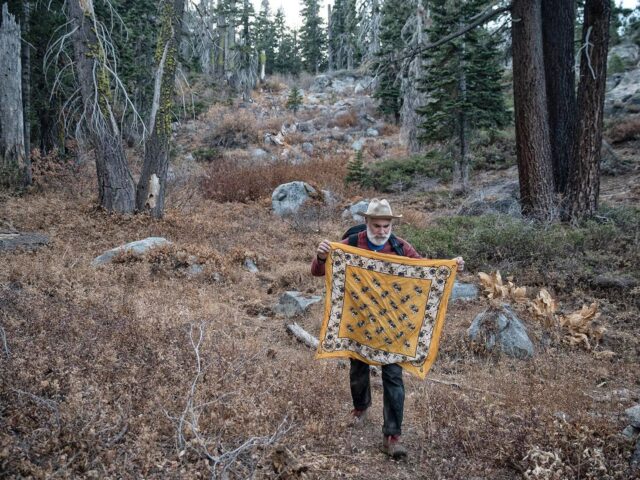
Jonathan Lukacek spent almost ten years trying to make a bandanna properly. The search took him through thousands...
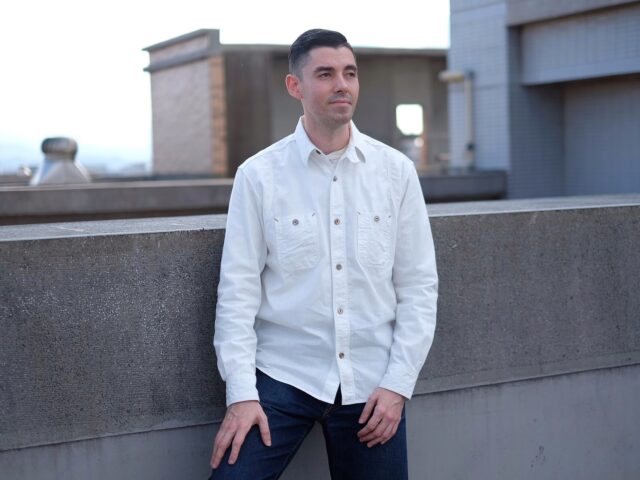
When we spoke to The Rite Stuff founder Bryan Shettig in March 2020, his young label was already...

Papa Nui began with a practical problem under the Australian sun. John Tesoriero was wearing an inexpensive reproduction...
Stay in the know
Sign up for occasional updates from Those That Know.
You are now signed up to receive updates from Those That Know.